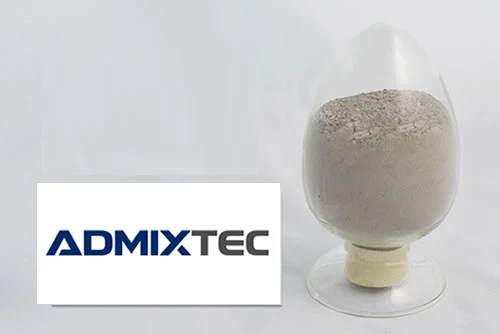
What is Soundless Cracking Agent Raw Material?
A soundless cracking agent, also called a non-explosive demolition agent, static cracking agent or expansive demolition mortar, is a powder that is mixed with water and poured into drilled holes in rock or concrete. As the slurry hydrates inside the hole, it expands and builds pressure against the hole walls until the material cracks. The process produces no blast, flying debris, ground vibration or toxic gas, so it is used where explosives are restricted or impractical. Typical applications include quarrying dimension stone, removing boulders, demolishing concrete foundations and reinforced structures, and breaking rock near buildings, pipelines or occupied areas.
Soundless cracking agent raw material refers to the components a manufacturer combines to produce the finished powder. The main ingredient in most commercial products is calcium oxide (quicklime), which supplies the expansion. Formulators then add functional components that control how fast the reaction starts, how much water the slurry needs, how well it flows into the hole, and how the product behaves at different ambient temperatures. These additives commonly include water-reducing agents, set-controlling retarders, and mineral components such as Portland cement clinker or calcium sulfate.
The quality of these raw materials largely determines product performance in the field. Two agents with similar quicklime content can perform very differently if the lime reactivity, fineness or additive package differs. A poorly balanced formulation may react too quickly and eject slurry from the hole, a hazard known as blowout, or it may react too slowly and develop insufficient pressure to crack the target.
| Raw material category | Typical examples | Main role in the formulation |
|---|---|---|
| Expansive component | Calcium oxide (quicklime), usually calcined at high temperature | Produces volume expansion during hydration |
| Water-reducing agent | Naphthalene-based superplasticizer, polycarboxylate superplasticizer | Lowers water demand while keeping the slurry pourable |
| Retarder | Gluconates and other set-controlling admixtures | Delays the onset of the reaction to give working time |
| Mineral or binding component | Portland cement clinker, calcium sulfate | Helps the hardened slurry stay confined and supports pressure buildup |
How Soundless Cracking Agent Raw Materials Work?
Expansion from quicklime hydration
The working principle rests on the reaction between calcium oxide and water, which forms calcium hydroxide. The solid reaction product occupies substantially more volume than the original calcium oxide, roughly double in solid volume. When the slurry is free to expand, this growth simply pushes the material upward. When it is confined inside a drilled hole, the expansion is restrained and converted into pressure on the hole walls.
Rock and concrete are strong in compression but comparatively weak in tension. Ordinary concrete has a tensile strength of only a few megapascals, while commercial soundless cracking agents are typically designed to generate expansive pressures in the range of tens of megapascals over several hours. Once the tensile stress around the hole exceeds the strength of the material, cracks form and propagate between adjacent holes. Operators control the crack pattern through hole layout, diameter, depth and spacing.
Controlling reaction speed
Ordinary quicklime reacts with water very quickly and releases a large amount of heat. If that happens inside a hole, the slurry can heat up, generate steam and eject from the hole before it has hardened enough to stay confined. For this reason, the calcium oxide used in soundless cracking agents is usually calcined at higher temperatures, which produces a denser, less reactive lime that hydrates more gradually. Particle size also matters, because finer particles expose more surface area and react faster.
Retarders add a second layer of control. They delay the start of hydration so that crews have time to mix and fill all the holes, and they help spread the heat release over a longer period. Many manufacturers offer separate product grades for different ambient temperature ranges, because the same formulation that works well in cool weather can react dangerously fast in summer heat, and a hot-weather grade may react too slowly in winter.
The role of water-reducing agents
The slurry must be fluid enough to pour fully into the hole without air pockets, yet every unit of water beyond what the reaction needs dilutes the expansive material. Excess water also leaves voids as it evaporates or migrates, which lowers the final pressure. Water-reducing agents, including superplasticizers commonly used in concrete, disperse the powder particles so that the slurry reaches workable flow at a lower water-to-powder ratio. Commercial products are commonly mixed at a water content of around 30% of the powder weight, although the exact figure depends on the specific formulation and the supplier's instructions.
The choice of water reducer affects compatibility with the lime and other components. Naphthalene-based superplasticizers have a long history in cement-based systems. Polycarboxylate superplasticizers can deliver high water reduction at low dosages, but their performance in strongly alkaline, high-calcium systems should be verified through trial mixes before scaling up production.
| Formulation factor | If too high or too fast | If too low or too slow |
|---|---|---|
| Lime reactivity | Rapid heating, steam and risk of blowout | Slow pressure buildup and long cracking times |
| Water content | Diluted slurry and lower expansive pressure | Poor flow and incomplete hole filling |
| Retarder dosage | Excessive delay and reduced early pressure | Short working time and fast heat release |
How to Choose Soundless Cracking Agent Raw Materials?
Assess the quality of the calcium oxide
Because quicklime supplies the expansion, its quality has the largest single effect on performance. Buyers should ask suppliers for the available calcium oxide content, the calcination conditions or reactivity test results, the particle size distribution and the moisture content. Quicklime absorbs moisture and carbon dioxide from the air, which converts part of it into calcium hydroxide or calcium carbonate and reduces its expansive potential. Sealed, moisture-resistant packaging and short storage times protect raw material quality.
Match the additive package to climate and application
A formulator selling into hot regions needs a raw material package that keeps the reaction slow at high ambient and rock temperatures. Products for cold regions need enough reactivity to develop pressure when the rock is cool. Application matters as well. Reinforced concrete generally needs higher pressure and closer hole spacing than plain concrete or soft rock, and dimension stone quarrying may prioritize controlled, predictable crack lines over raw pressure. These requirements should guide decisions on lime grade, retarder type and dosage, and water reducer selection.
Verify water reducer compatibility
Not every superplasticizer performs the same way in a high-lime system. A water reducer that works well in ordinary concrete may lose effectiveness, change setting behavior or interact with the retarder. Formulators should test candidate water reducers by measuring slurry flow at a fixed water ratio, the time to temperature rise, and the expansive pressure or cracking result in test specimens. Consistent batch-to-batch quality from the water reducer supplier is as important as the initial test result, because variation in solids content or molecular structure will show up as variation in the finished product.
Evaluate supplier documentation and consistency
For B2B procurement, documentation is a practical indicator of supplier reliability. A capable supplier should provide a technical data sheet, a safety data sheet, batch test reports and clear storage and handling guidance. Buyers who need conformity with a particular national or industry standard should request the relevant test reports and confirm them directly, rather than relying on general marketing statements. Requesting samples for in-house trials before placing volume orders reduces the risk of formulation problems later.
| Selection criterion | What to request or test | Why it matters |
|---|---|---|
| Calcium oxide content and reactivity | Chemical analysis, reactivity or slaking test data | Determines expansive potential and reaction speed |
| Fineness | Particle size distribution or sieve residue | Affects reaction rate and slurry flow |
| Water reducer performance | Flow test at fixed water ratio in the actual formulation | Confirms water reduction in a high-lime system |
| Batch consistency | Certificates of analysis for each batch | Keeps finished product performance stable |
| Packaging and storage | Moisture-resistant packaging, shelf life guidance | Prevents loss of activity before use |
FAQ
What is the main raw material in a soundless cracking agent?
The main raw material is calcium oxide, also known as quicklime. Its hydration to calcium hydroxide produces the volume expansion that cracks rock and concrete. Additives such as retarders, water-reducing agents and mineral components are blended with it to control reaction speed and workability.
Why are superplasticizers used in soundless cracking agents?
Superplasticizers allow the slurry to flow into drilled holes at a lower water content. Less water means a denser slurry with more expansive material per unit volume, which supports higher pressure inside the hole.
What causes blowout, and how do raw materials affect it?
Blowout happens when the slurry reacts too quickly, heats up and ejects from the hole before it is confined. Using lime with controlled reactivity, an appropriate retarder dosage and a product grade suited to the ambient temperature reduces this risk. Users should also follow the supplier's safety instructions and avoid looking directly into filled holes.
How long does a soundless cracking agent take to crack concrete or rock?
Cracking time depends on the formulation, temperature, hole size and the material being broken. Many products produce initial cracks within several hours to about a day under suitable conditions. Cold temperatures generally slow the process.
How should soundless cracking agent raw materials be stored?
Store them in sealed packaging in a dry, cool place away from water and humid air. Quicklime gradually loses activity when it absorbs moisture and carbon dioxide, so suppliers usually recommend using the material within a defined period after production.
Can the same formulation be used year-round?
Usually not. Reaction speed changes considerably with temperature, so manufacturers commonly adjust the raw material package or offer separate grades for hot, moderate and cold conditions.